The Difference Between a Layer and an Operation
Why defining distinct operation attributes differs fundamentally from generic visual layer coloring.
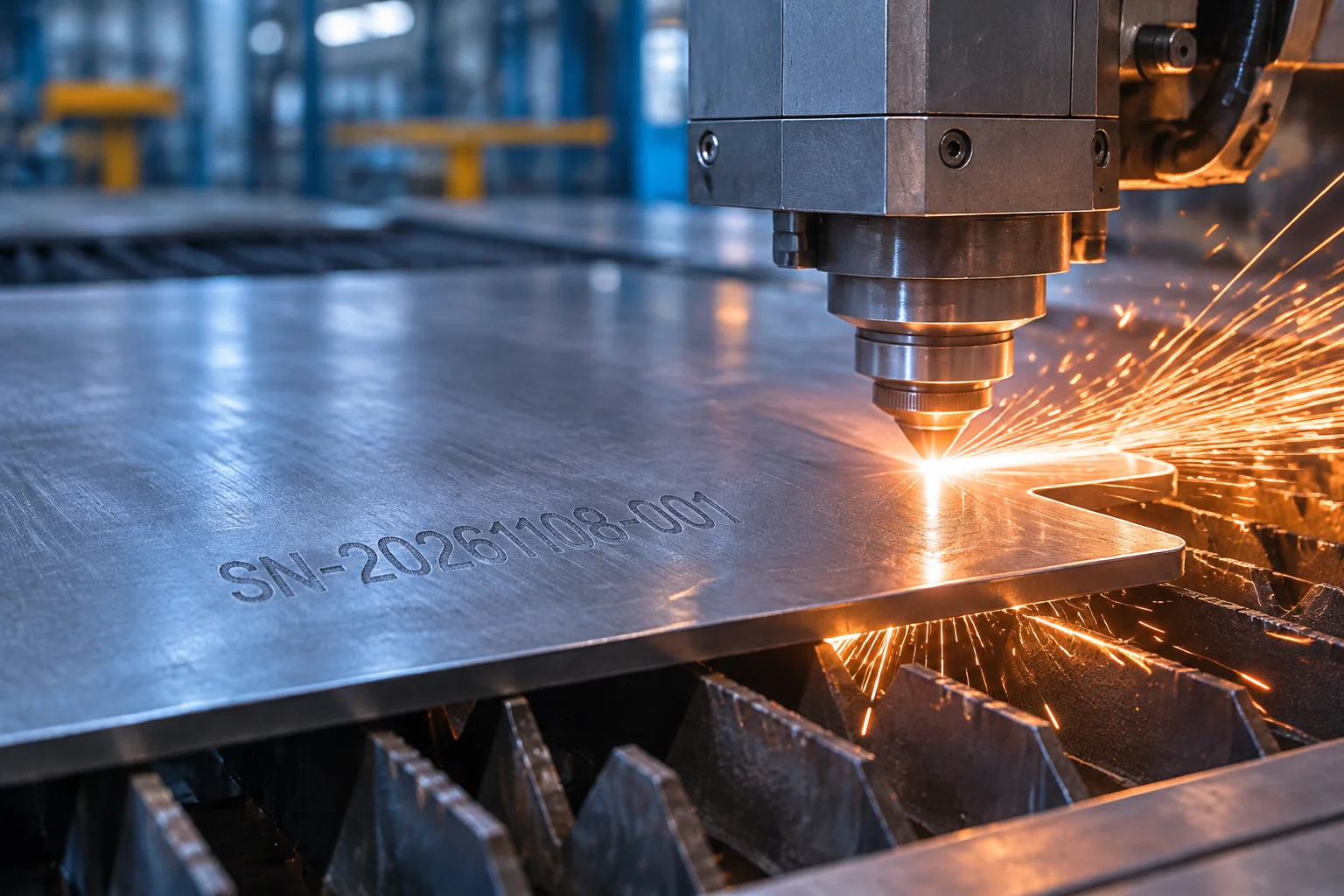
Read articleEstablishing proper execution hierarchy so surface scoring and serial engraving occur while stock retains complete mechanical rigidity.
In laser cutting workflows, separating a part from its carrier sheet frees it from material tension and registration boundaries. Marking or engraving an unanchored component introduces focal drift, registration skew, and aerodynamic blow-out from exhaust airflow. Performing marking operations first preserves micro-millimeter tolerance.
When a laser beam severs the outer boundary of a workpiece, internal sheet stresses release immediately. The resulting part frequently tilts onto the bed slats or shifts several tenths of a millimeter due to forced exhaust airflow.
Executing marking or shallow scoring operations after contour severance introduces severe misalignment. The part is no longer locked into the coordinate system of the raw sheet. High-speed vector marking maneuvers impose rapid acceleration cycles, and any vibrations or air draft will physically displace a free-floating part, ruining fine serial text and datamatrix codes.
Sequence planning is not merely a software convenience; it is a physical guarantee of dimensional repeatability. Retaining parts inside parent stock until all superficial detailing concludes avoids scrap piles and protects high-tolerance manufacturing.
Our field technicians review cutting orders, kerf compensation strategies, and motion planning to optimize cycle times without quality loss.
Why defining distinct operation attributes differs fundamentally from generic visual layer coloring.
Read articleHow geometry grouping overrides layer-wide priority and alters motion paths between segments.
Read articleSecuring mechanical stability by piercing internal contours while stock remains anchored.
Read articleA concise 5-point physical verification protocol before enabling laser discharge.
Read article