
Sequence 01
2026-09-08
Marking Before Cutting
Why surface labeling and score passes must strictly precede structural perimeter severance.
Read articleA systematic 5-point verification routine to catch optical, mechanical, and sequential discrepancies before executing a laser discharge cycle.
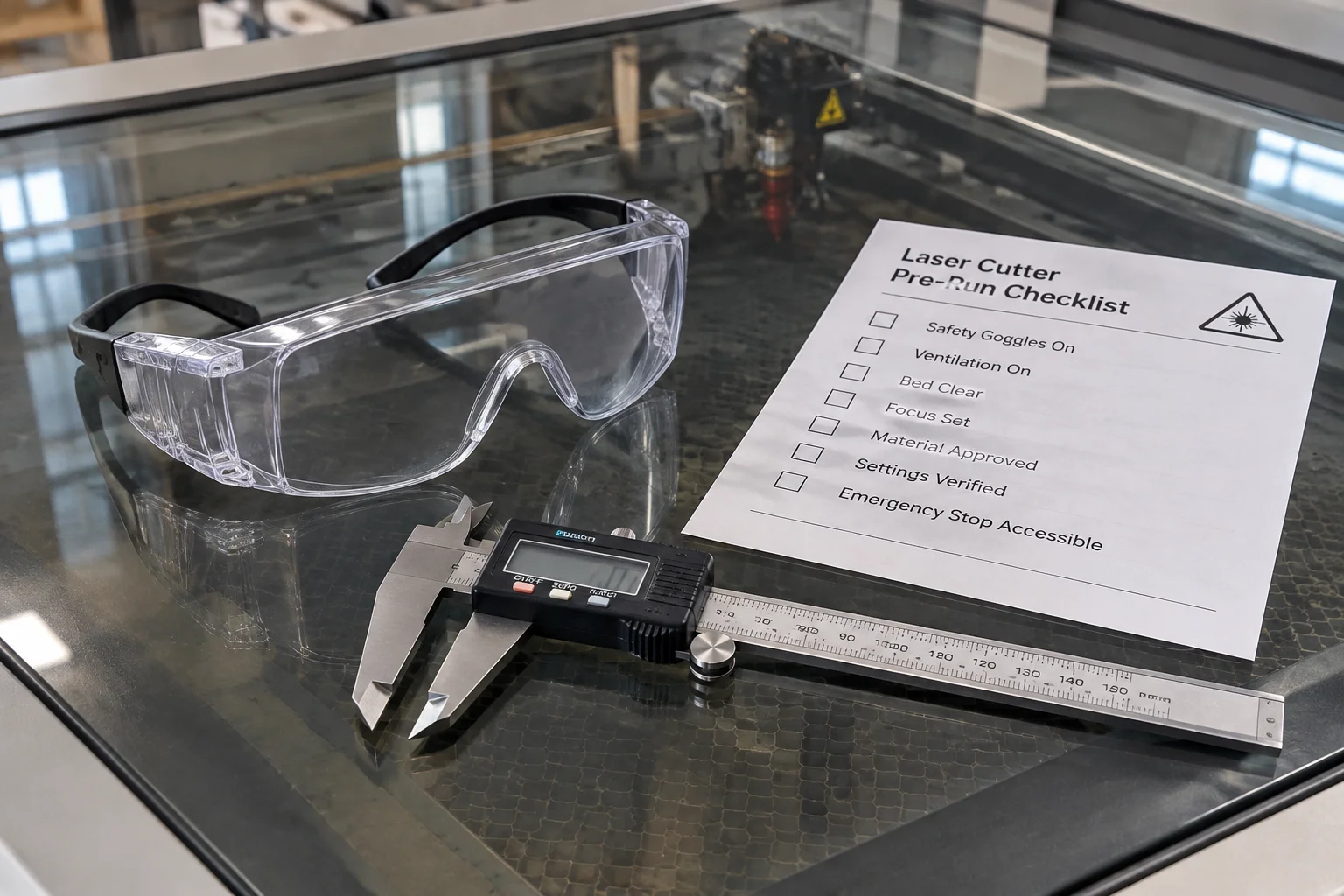
Before triggering laser emission, physical and digital mismatches represent the highest risk factor for material scrap or lens contamination. A disciplined pre-start sequence confirms mechanical head clearance, verifies air assist active line delivery, inspects optics, and reconciles software layer sequencing against real-world workpiece clamping.
Executing an unverified job directly from the CAD/CAM window is the most common cause of spoiled material and damaged optics. Even when software trajectories appear immaculate on a monitor, real-world physical parameters demand strict confirmation.
Clamping hardware may project into the motion path of the gantry, nozzle clearance might be set for an unwarped panel while the actual sheet has a crown, or an exhaust damper might remain partially closed. Running through a standardized pre-flight checklist isolates mechanical, pneumatic, and digital variables into a repeatable sixty-second routine.
Preventing mid-job crashes or smoke-stained lenses relies on establishing consistent operating habits prior to beam emission.
Connect directly with our technical shop coordinators to standardize cutting checklists, optimize safety protocols, and audit equipment maintenance logs.
Why surface labeling and score passes must strictly precede structural perimeter severance.
Read articleHow geometry grouping overrides layer-wide priority and alters motion paths between segments.
Read articleSecuring mechanical stability by piercing internal contours while stock remains anchored.
Read articleSystematic inspection of nested components, travel movements, and geometry spacing before job dispatch.
Read article