
Sequence 01
2026-09-08
Marking Before Cutting
Why surface labeling and score passes must strictly precede structural perimeter severance.
Read articleInspecting nested sheets before cutting prevents part collisions, scrap waste, and erratic head traversal across production jobs.
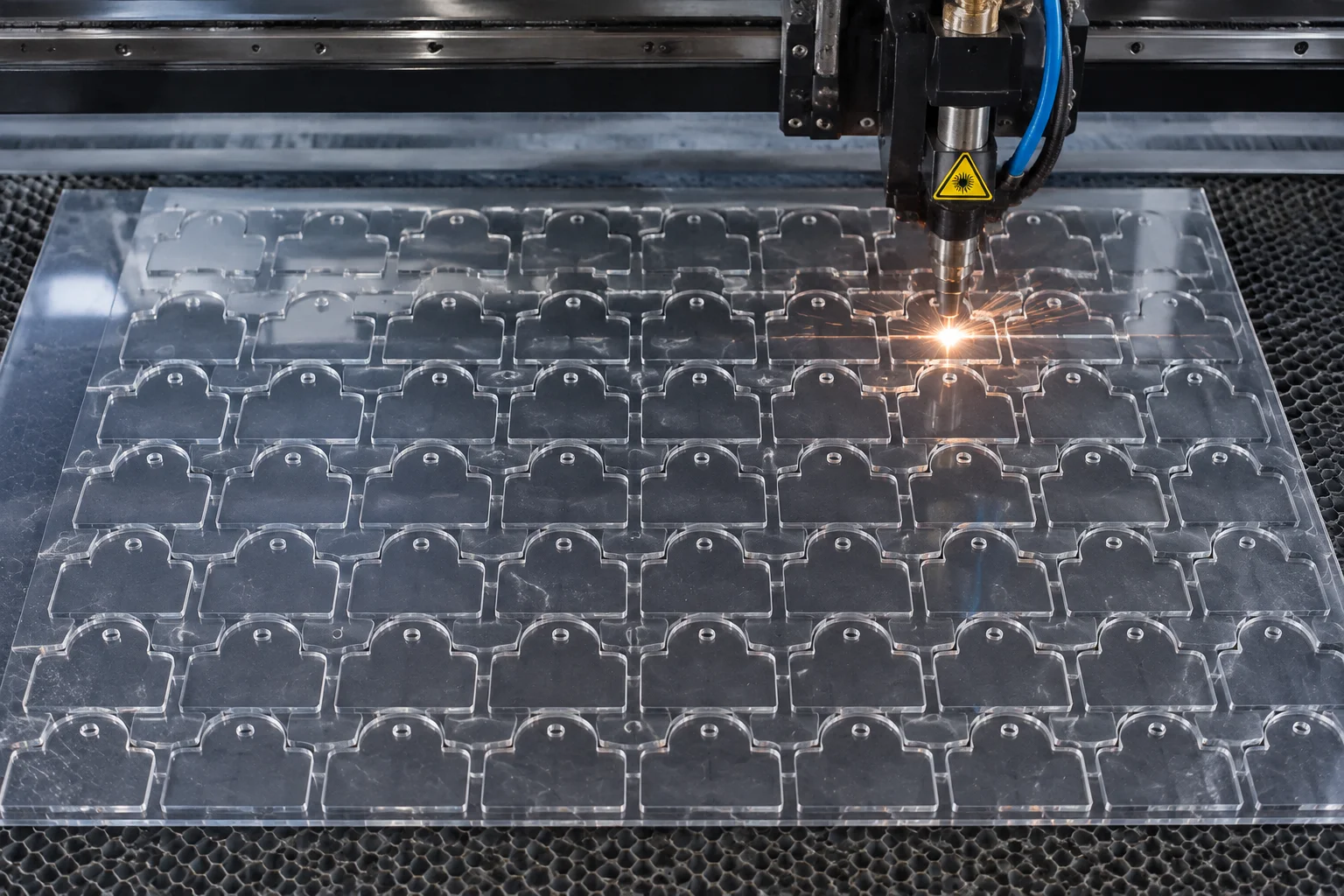
Placing dozens of parts on one sheet multiplies production risks. A broken cut priority or an uninspected shared line can tip parts into the laser path or warp thin material. This field checklist details how to evaluate layout order, kerf compensation, and part separation before firing the beam.
Nesting efficiency often tempts operators to cram components within fractions of a millimeter. When the laser fires, localized thermal buildup relaxes internal material stresses and released parts shift unexpectedly.
Reviewing a layout demands tracking three interdependent factors: the physical distance between contours, the chronological order in which adjacent units cut, and the rapid transit lines connecting them. Processing an entire nest by layer without cluster-level grouping forces the laser head to zip wildly across the bed, wasting minutes and increasing collision risks over fallen scrap.
A disciplined 90-second layout audit in software saves entire sheets from scrap bins and prevents costly laser head nozzle strikes.
Contact our field specialists to diagnose erratic travel paths, solve nesting interference, or optimize job runtimes.
Why surface labeling and score passes must strictly precede structural perimeter severance.
Read articleHow geometry grouping overrides layer-wide priority and alters motion paths between segments.
Read articleSecuring mechanical stability by piercing internal contours while stock remains anchored.
Read articleA concise 5-point physical verification protocol before enabling laser discharge.
Read article