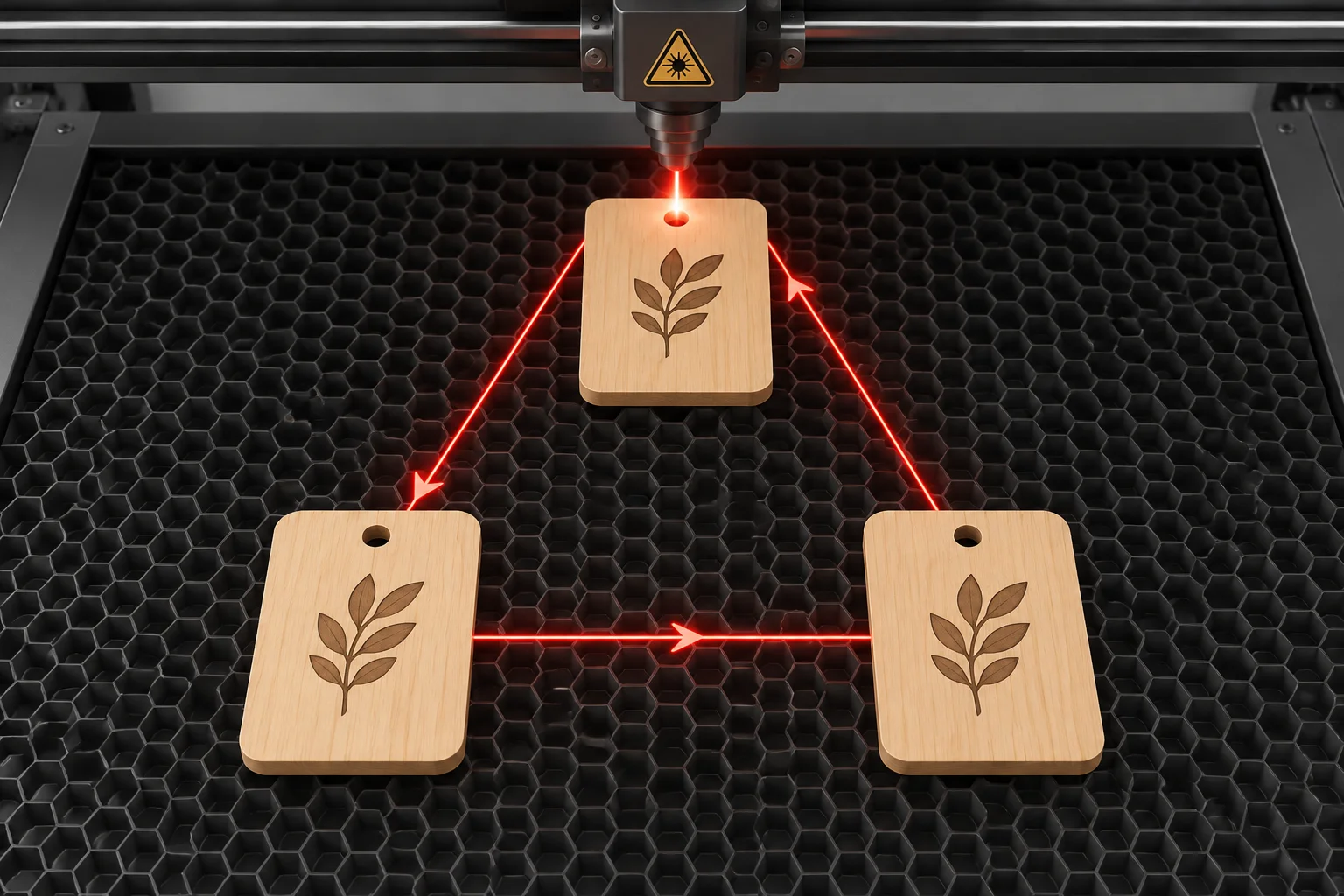
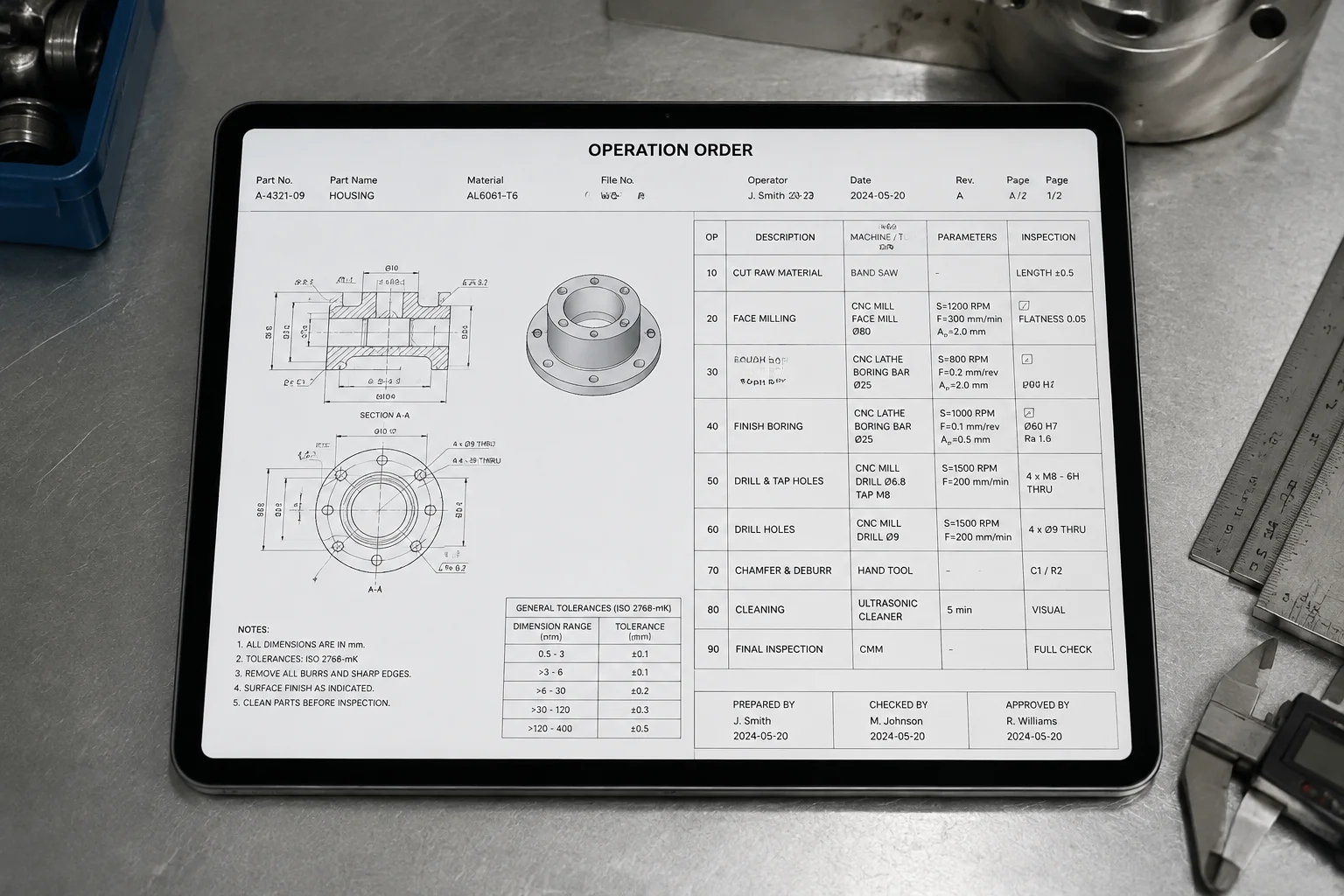
- Primary Strategy
- Inside-Out Hierarchy
- Marking Phase
- Pre-Cut Surface Pass
- Vector Separation
- Dedicated Color IDs
- Validation Step
- Simulated Dry-Run Preview
An operation order sheet serves as the master blueprint for laser processing, dictating exactly when engravings, internal cutouts, and perimeter contours take place during a run.
Laser cutters follow instructions without understanding part mechanics. When an outer boundary cuts before interior holes, the separated stock drops onto the honeycomb bed, shifting out of focal depth and rendering subsequent laser passes useless. Drafting a clean operation order sheet eliminates guesswork by documenting machine parameters, processing order, and layer dependencies before sending code to the controller.
Defining the Multi-Tiered Sequence Hierarchy
Structuring operations demands strict adherence to physical material behavior. Surface treatments always precede mechanical separation, preserving maximum sheet tension and vacuum clamp performance during intricate passes.
- Phase 1: Raster engraving and high-speed surface scoring while sheet tension is 100% rigid.
- Phase 2: Internal geometry, registration holes, and sub-assembly cutouts executed from smallest to largest.
- Phase 3: Final perimeter profile parting cut, allowing components to release cleanly without mid-job collisions.
“A flawless drawing becomes scrap the moment an operator runs perimeter cuts before internal features; sequence planning is true engineering.”
— Marcus Vance, Lead Fabrication Engineer
Eliminating Thermal Distortion and Geometry Shifting
Thermal buildup alters acrylic and thin sheet metals when vector paths concentrate in small clusters. Your operation sheet must account for heat distribution by interleaving cuts across opposite quadrant zones, or implementing cool-down delays between intensive vector runs.
Grouping settings in controller software can accidentally override assigned layer orders if bounding boxes are evaluated as self-contained blocks. The order sheet must specify whether software optimizes by layer priority, grouped clusters, or shortest travel path, ensuring operators never activate auto-optimizations that reshuffle designated toolpaths.
Standardized Documentation for Floor Operators
Handing off a digital file without a written sequence sheet invites expensive machine crashes. Operators rely on the order sheet to double-check focal offset heights, assist gas pressure per stage, and run dry-run head simulations before firing the beam. Documenting feed rates, pulse frequencies, and color-coded layer rules turns individual expertise into repeatable shop floor standards.
Specializing in industrial laser cutting workflows, shop-floor standardization, and CAD/CAM order optimization with over twelve years in precision manufacturing.
Get in touch with our workflow specialists for tailored multi-layer sequencing protocols and job-routing advice.